
Inimist Tech | March 2, 2023
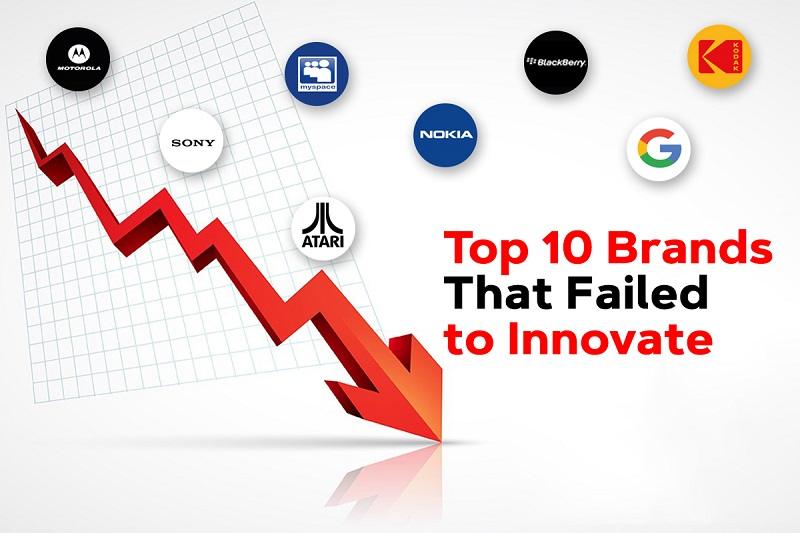
Top 10 Brands That Failed to Innovate
Innovation is the lifeblood of business. Companies that fail to adapt to changing market trends and consumer needs often struggle to stay relevant. Here are ten top brands that serve as cautionary tales for failing to innovate in time.
1. Blockbuster
At its peak, Blockbuster was the king of video rentals, with thousands of stores worldwide. However, the company’s inability to transition to digital streaming spelled its doom. Blockbuster famously passed on the opportunity to buy Netflix for $50 million in 2000, underestimating the potential of online streaming. Netflix’s rise and Blockbuster’s refusal to adapt led to the latter’s eventual bankruptcy in 2010.
2. Kodak
Kodak was once synonymous with photography, dominating the global camera and film market. Ironically, Kodak invented the digital camera in 1975 but failed to capitalize on it, fearing it would cannibalize its film business. As competitors like Canon and Nikon embraced digital technology, Kodak lost its market share, eventually filing for bankruptcy in 2012.
3. Nokia
Nokia was a pioneer in the mobile phone industry and at one time held over 40% of the global market share. However, its reluctance to embrace the smartphone revolution, particularly touchscreen technology and app ecosystems, allowed competitors like Apple and Samsung to dominate. By the time Nokia adopted Android, it was too late, and the brand faded into irrelevance in the mobile market.
4. Toys “R” Us
Toys “R” Us was a beloved toy retailer for decades, but its failure to adapt to e-commerce trends led to its downfall. Despite partnering with Amazon in the early 2000s, the company did not develop its own robust online platform. Coupled with mounting debt and stiff competition from online retailers like Amazon and Walmart, Toys “R” Us filed for bankruptcy in 2017.
5. Yahoo
Yahoo was once a leader in internet services, including search, email, and news. However, its lack of focus and a series of poor strategic decisions, such as rejecting a $44 billion acquisition offer from Microsoft in 2008, contributed to its decline. Yahoo failed to compete with Google in search and Facebook in social media, eventually being acquired by Verizon in 2017 for a fraction of its former value.
6. BlackBerry
BlackBerry was a trailblazer in the smartphone market, known for its physical keyboards and secure email services. However, its failure to innovate and adapt to touchscreen technology and app ecosystems allowed Apple and Android devices to dominate. By the time BlackBerry pivoted, its market share had dwindled to insignificance.
7. MySpace
Once a dominant force in social networking, MySpace failed to keep up with the evolving features and user experience offered by competitors like Facebook. Poor management decisions and an inability to adapt to the changing digital landscape led to its rapid decline.
8. Sears
Sears was a retail giant for over a century, pioneering the mail-order catalog. However, its failure to adapt to the rise of e-commerce and modernize its stores led to a steady decline. With mounting debt and stiff competition from Amazon and Walmart, Sears filed for bankruptcy in 2018.
9. Pan Am
Once a symbol of luxury air travel, Pan Am failed to adapt to changing industry dynamics, such as deregulation and rising fuel costs. The company’s inability to manage operational inefficiencies and diversify its revenue streams led to its bankruptcy in 1991.
10. Xerox
Xerox was a pioneer in photocopying and computing technology. Despite inventing key innovations like the graphical user interface and the mouse, Xerox failed to capitalize on these breakthroughs. Other companies, such as Apple, reaped the benefits of Xerox’s innovations, leaving Xerox struggling to maintain relevance.
Lessons Learned
These cautionary tales highlight the importance of:
- Adapting to Technology Trends: Companies must embrace disruptive technologies rather than fear them.
- Understanding Consumer Behavior: Keeping a pulse on what customers want and need is critical to staying relevant.
- Agility in Business Models: Flexibility to pivot or evolve is often the key to long-term survival.
Innovation isn’t just about creating new products—it’s about staying ahead of the curve and being willing to change. These brands serve as reminders of what happens when businesses fail to do so.
Inimist Tech | February 25, 2023
Revenue Comparison of the Big 4 Tech Giants: 2024 vs. 2023
In the ever-evolving landscape of technology, the Big 4 tech giants—Apple, Microsoft, Google (Alphabet), and Amazon—continue to dominate the industry with their substantial revenue streams. As we delve into the revenue figures for these companies in 2024 compared to the previous year, it’s evident that each has carved out a unique path in navigating economic challenges and leveraging growth opportunities.

Apple
In 2024, Apple Inc. achieved a revenue of approximately $410 billion, marking a 7% increase from $384 billion in 2023. This growth can be attributed to several key factors:
- Product Innovation: The launch of the iPhone 15 series and advancements in MacBook and iPad technologies helped drive consumer interest and sales.
- Services Expansion: Apple’s services sector, including Apple Music, Apple TV+, and iCloud, saw significant growth, contributing a more substantial share to overall revenue.
- Market Penetration: Increased adoption in emerging markets, especially in Asia, bolstered Apple’s revenue.
Microsoft
Microsoft reported a revenue of $240 billion in 2024, a 10% increase from $218 billion in 2023. This growth reflects:
- Cloud Computing: Azure continued to outperform expectations, with increased demand for cloud services and AI solutions.
- Productivity Tools: The Microsoft 365 suite remained a significant revenue driver, benefiting from a steady rise in enterprise subscriptions.
- Gaming: The gaming segment, particularly with the success of Xbox Series X and Game Pass, also contributed positively.
Alphabet (Google)
Alphabet, the parent company of Google, saw its revenue reach $230 billion in 2024, up from $207 billion in 2023, marking an 11% increase. Key drivers include:
- Ad Revenue: Despite regulatory challenges, Alphabet’s advertising business remained robust, with increased revenue from both search and YouTube ads.
- Cloud Growth: Google Cloud made substantial strides, capturing a larger market share in the cloud services sector.
- AI and New Ventures: Investments in AI research and new technology ventures contributed to overall revenue growth.
Amazon
Amazon’s revenue for 2024 was $470 billion, a 5% increase from $447 billion in 2023. The growth trajectory was supported by:
- E-Commerce: Continued expansion in global e-commerce markets, despite logistical challenges and competition.
- AWS: Amazon Web Services remained a significant revenue source, with increased enterprise adoption and new service offerings.
- Subscription Services: Growth in Amazon Prime memberships and other subscription services also contributed to the revenue increase.
Comparative Analysis
Overall, each of the Big Four tech giants has demonstrated resilience and growth in 2024. Apple and Microsoft showed impressive revenue increases through their product and service innovations, while Alphabet and Amazon capitalized on their respective strengths in advertising, cloud computing, and e-commerce.
The revenue growth across these companies highlights the tech sector’s adaptability and the continued high demand for digital products and services. While economic fluctuations and regulatory scrutiny pose challenges, the strategic investments and innovations by these giants underscore their capacity to thrive in a competitive landscape.
Inimist Tech | February 22, 2023
Big Four Tech Giants: Unveiling Their Staggering Revenue Figures
In the competitive landscape of global technology, the Big Four tech giants—Apple, Amazon, Google (Alphabet Inc.), and Microsoft—continue to dominate not only in innovation but also in financial might. Let’s delve into their latest revenue figures, showcasing their immense influence and economic prowess.
Apple Inc.
Apple, renowned for its iconic products and expansive ecosystem, reported a staggering revenue of $365 billion for its fiscal year 2023. This marked a significant increase from the previous year, driven by robust sales of iPhones, iPads, Macs, and wearables.
Apple’s services segment, including Apple Music, iCloud, and the App Store, also played a pivotal role in its revenue growth, highlighting its successful transition towards recurring revenue models.
Amazon.com, Inc.
Amazon, the global e-commerce giant, reported a massive revenue figure of approximately $469 billion for its fiscal year 2023. Beyond its core online retail operations, Amazon’s diversified revenue streams include Amazon Web Services (AWS), the leading cloud computing platform, and a burgeoning digital advertising business.
Despite challenges such as supply chain disruptions, Amazon’s ability to capture consumer spending across multiple sectors underscores its resilience and strategic agility.
Alphabet Inc. (Google)
Alphabet, the parent company of Google, reported revenue of around $261 billion for its fiscal year 2023. Google continues to dominate the digital advertising market, benefiting from the shift towards online advertising and the increasing digitalization of businesses worldwide.
Alphabet’s other ventures, including cloud computing services through Google Cloud and innovations in artificial intelligence, contribute to its robust revenue stream and technological leadership.
Microsoft Corporation
Microsoft, known for its software products and cloud services, reported a formidable revenue of approximately $224 billion for its fiscal year 2023. Azure, Microsoft’s cloud computing platform, has seen substantial growth, positioning the company as a major competitor to Amazon’s AWS.
Microsoft’s productivity and business processes segment, encompassing Office 365 and LinkedIn, further bolstered its revenue growth, reflecting strong demand for its enterprise solutions.
Inimist Tech | January 22, 2023
The Future Projects of Meta Platforms Inc. (formerly Facebook)
Meta Platforms Inc., formerly known as Facebook, has been at the forefront of shaping the digital landscape with its innovative platforms and technologies. As the company continues to evolve, its future projects offer a glimpse into the ambitious initiatives that aim to redefine social interactions, virtual experiences, and digital connectivity.

1. Metaverse Development
One of Meta’s most ambitious endeavors is the development of the metaverse—a virtual environment where users can interact, socialize, work, and play in immersive digital spaces. Mark Zuckerberg, Meta’s CEO, has articulated a vision for the metaverse as the next evolution of the internet, where augmented reality (AR) and virtual reality (VR) technologies converge to create seamless and lifelike experiences. Meta envisions a future where people can attend virtual meetings, explore virtual worlds, and engage in collaborative activities across distances.
2. Virtual Reality (VR) and Augmented Reality (AR)
Building on its acquisition of Oculus VR in 2014, Meta has been heavily investing in VR and AR technologies. The Oculus brand has become synonymous with high-quality VR headsets, fostering a vibrant ecosystem of VR content creators and developers. Meta aims to integrate VR and AR into everyday experiences, from gaming and entertainment to education and professional collaboration. Projects like Project Aria, Meta’s AR glasses prototype, showcase its commitment to blending digital and physical realities seamlessly.
3. AI and Machine Learning
Meta continues to advance its capabilities in artificial intelligence (AI) and machine learning (ML), enhancing user experiences across its platforms. AI powers personalized content recommendations, automated content moderation, and immersive AR effects, enriching how users interact with digital content. Meta’s AI research focuses on improving natural language processing, computer vision, and reinforcement learning to create more intuitive and responsive digital experiences.
4. Connectivity Initiatives
Recognizing the importance of global connectivity, Meta is actively working on initiatives to expand internet access and infrastructure worldwide. Projects like the Connectivity Lab aim to develop high-altitude drones and satellites to deliver internet connectivity to underserved areas. Additionally, Meta collaborates with telecom operators and technology partners to deploy innovative solutions that bridge the digital divide and empower communities with reliable internet access.
5. Blockchain and Digital Payments
Meta is exploring the potential of blockchain technology and digital currencies to transform financial transactions and online commerce. The company’s Diem (formerly Libra) project aims to create a global payment system that facilitates secure and low-cost transactions across borders. By leveraging blockchain technology, Meta seeks to enhance financial inclusion and empower businesses and individuals to participate in the digital economy seamlessly.
6. Sustainability and Environmental Responsibility
Meta is committed to sustainability and minimizing its environmental footprint. The company has pledged to achieve net-zero greenhouse gas emissions for its global operations and value chain by 2030. Meta invests in renewable energy projects, designs energy-efficient data centres, and promotes sustainable practices across its business operations to mitigate climate change impacts and promote environmental stewardship.
Conclusion
Meta Platforms Inc.’s future projects underscore its vision to pioneer new frontiers in digital technology and redefine how people connect, communicate, and interact in the digital age. With a focus on the metaverse, VR/AR, AI, connectivity, blockchain, and sustainability, Meta continues to innovate and shape the future of technology-driven experiences. As these projects evolve, Meta aims to empower communities, foster meaningful connections, and drive positive societal impact through cutting-edge digital innovations.
Latest Posts
-

-
Fitness App Development in 2025: The Ultimate Guide for Success
November 5, 2025 -
IT Companies in Mohali The Impact of Mobile Apps
July 8, 2025 -
Mastering Mobile App Development in 2025
June 8, 2025